Hi there! Welcome to Greg’s InsighTalk. Today’s lecture focuses on government and politics. This Insightalk is the fourth part of our discussion on major social institutions.
What is a government? The government, including politics, is the most controversial social institution because it is crucial in managing other institutions through policymaking and law enforcement to maintain societal order. To simplify it, the government is a system of social control, symbolizing power and authority. As a significant social institution, the government adjoins politics, having state-society mutual interactions by which politics entails social behaviour in groups and its relationship to governance to achieve and sustain power. In simple terms, politics is the affairs or activities of the government associated with decision-making for groups and power relations among individuals, among other things. Therefore, government and politics are inseparable as they go along.

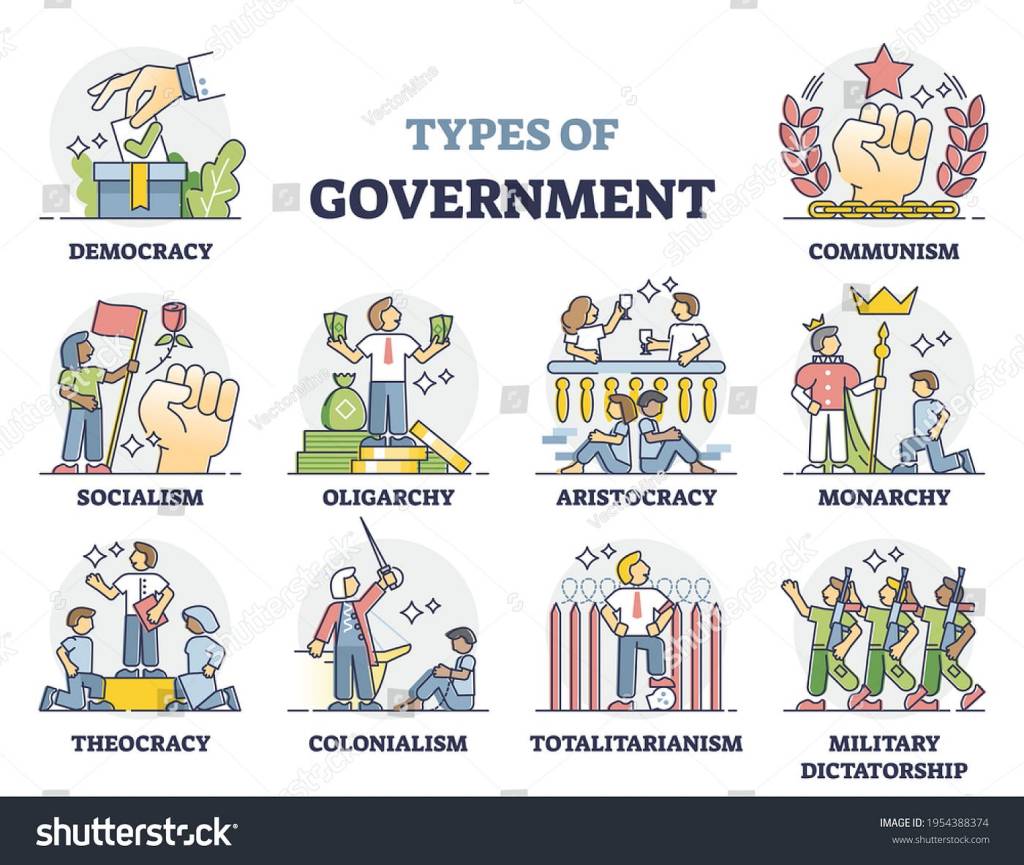
The Common Types of Government. Remarkably, we discuss major social institutions in general. At this point, we always try to explain a more specific topic. For instance, today’s typical forms of government include monarchy, aristocracy, democracy, oligarchy, communism, totalitarianism, socialism, dictatorship and colonialism (https://elawtalk.com/types-of-government-systems/). These governments describe who rules the government by the number of people where the power and influence emanate. For example, Great Britain is famous for its monarchy system, and China and Cuba are communist nations. At the same time, the United States, Canada and the Philippines adhere to the democratic system of governance. Given the examples of each type of government, let us focus on the democratic form of government as the most celebrated government system.
The Democratic Forms of Government. Why am I choosing democratic government as the core of today’s Insightalk? It is so because it is the most controversial form of government for its democratic character. It also has the characteristic of a representative or pluralist government, which describes more than one centre of power, allowing freedom of association and recognizing and affirming diversity within political bodies. In this sense, let us briefly discuss what democracy is. Democracy describes an egalitarian (equal and free) government system where the people rule. Thus, its foundation is freedom. Abraham Lincoln, the 16th president of the United States of America, defined democracy as “a government of the people, for the people and by the people.” But, let us take what philosopher Plato thought about democracy. He claims it entails danger or risks because of extreme freedom, which has given unclear boundaries. In a system where everyone has a right to rule, it is easy for selfish people to lead and obtain power to realize their agenda rather than for the common good. A critical individual can observe such egocentric motives of political leaders while the people do not understand what freedom is in a social context. For instance, freedom without responsibility leads to anomie. It is a state of normlessness or lawlessness by which democratic government struggles to redefine liberty based on people’s rights. Well, this could be a good topic for the next Insightalk.

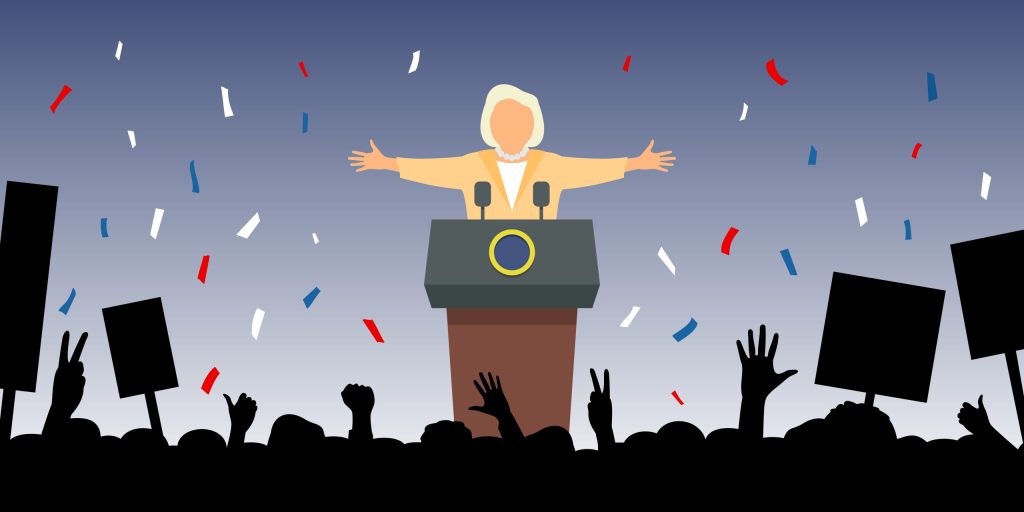
The Tripartite Government and the “Checks and Balances.” Focusing on the democratic form of government, let us consider its significant characteristics: majority rules, civil liberties, respect for fundamental human rights, freedom of expression, democratic voting system or elections, respect for the rule of law, citizen’s participation and a multi-party political system. The most common democratic forms of government are representative, constitutional, parliamentary and presidential democracy. They are also known as tripartite governments. These forms of government have a “checks and balances” system through the three independent branches: the executive, legislative and judiciary. How do they work? The legislative (the Senate and House of Representatives: Congress) makes or passes laws, the executive (for example, the President or Prime Minister and the Cabinet members) implements them, and the judiciary (the Supreme courts and other subsidiary courts) interprets them. Such a system safeguards that the separation of power avoids exerting or exercising too much power and diminishing power centralization on one entity or body.


Functions of the Government. Nevertheless, we might wonder what primary roles a government has. As one of the primary social institutions, the government is responsible for society’s orderliness, ensuring social order and guaranteeing other institutions are functional. It creates and enforces laws. It protects its citizens from foreign aggressions, thus strengthening its national defence and managing its foreign relations or affairs. The government provides services that people need, such as education and healthcare, while ensuring a strong economy that guarantees good public services. Political leaders execute government functions in different ways based on substantial changes in the form of government over the years.

Sociological Perspectives. Using a sociological lens, let us look at the three major perspectives to reflect on the functions of government and politics in our lives and society. First, from the functionalist perspective, the government has four primary purposes: to plan and direct social affairs, to meet the needs of the people, to maintain law and social order and to manage foreign affairs or international relations. Well, these functions are very straightforward. Thus, the government must guarantee a stable economy to sustain, at least, the people’s basic needs. From a functionalist view, government and politics enforce norms, regulate conflicts and ensure members are good citizens.
Second, from the conflict perspective, it always focuses on social inequality and power differences within a group, as we also consider the government as a social structure representing power and authority. For instance, the organizational hierarchy shows executive or management leaders’ influence and rule over the rank and file. They also represent the power elite, who usually make decisions and use the government to develop social policies to keep their wealth and control much of society. The power elite, coined by Charles Wright Mills (1956) as an amplification of Marx’s concept of conflict/inequality, is the unseen smallest group at the tip or apex of the social structure. Yet, this group can manipulate governance to retain its wealth and influence.
Finally, symbolic interaction focuses on meaning-making that acknowledges subjective meaning as a core of human behaviour during social contacts or interactions. Today, the mainstream media and other forms of media, such as social media, only make the public see the front porch of politics or the iceberg of governance through gatekeeping, creating or changing the meaning people absorb. It analyzes the meaning of everyday life or interactions using symbols, such as an emblem of power or offices or a picture of poverty, demonstrating or depicting their interactions with politicians or government leaders.
Summary. At large, the government manages a country’s local and foreign affairs for the good of its citizenry. If not, at least the majority of its people. Most of the time, we generalize what is good for the entire nation based on our observations and experiences of people who do not even represent the majority or will of the people. We must consider the representatives of people working for their constituents and let our votes speak in every election on how they work for us. It is always our wisest way of choosing our leaders that counts.
Thank you for watching. See you in our next Insightalk, our way to understanding social realities.
 The InsighTalk