Hello! You are with me at Greg’s InsighTalk. Our discussion will focus on the economy as another pillar of our society. This lecture is the third part of our discussion on major social institutions. It fuels the running and sustains other institutions. Let us learn more about it.
An economy is a significant institution responsible for the production, distribution and consumption of products or goods and services to keep our society working. It organizes the services, manufacturing and distribution of goods for human consumption — for instance, public service, banks and finances, teachers, lawyers, doctors, mechanics and hospitality in the service sector. In comparison, examples of goods are food, clothing, automobiles, furniture and appliances and electronics. Therefore, services refer to the non-physical or immaterial part of the economy that demonstrates the jobs performed by individuals, in contrast to goods, which are tangible, physical or touchable material products. Reflectively, the function and importance of economy point toward or are heavily attached to its definition. Hence, the people and their interactions and socialization demonstrate their cultures and all its aspects. The economy that illustrates how people sustain their lives is integral and conjoined to the society of people from which they are obliged to participate.

Now, let us consider a simple question: What does the economy do in society? At the very least, the economy needs to meet the needs of the people efficiently in constantly changing conditions, affecting their culture: attitudes and behaviours, values and traditions and their relationships. At this point, our society creates an economy that corresponds to the changing needs of the people, enforces strong tendencies of cultural shifts and reorganizes connections; for instance, local economies converge and transform into a global economy. An excellent illustration of this reorganization is traditional/organic farming to mass production through agricultural technology to meet the supply of a fast-growing population demand.
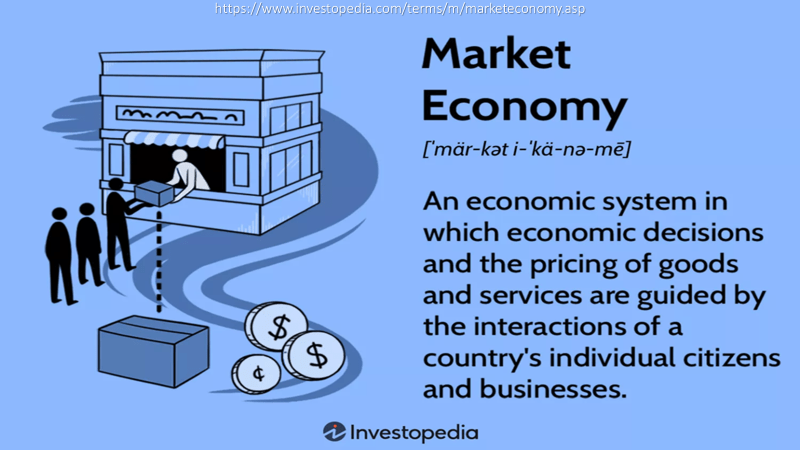
As a result, the economy altered traditional or standard food production to modern mass production based on supply and demand. At the same time, people’s behaviour on buying and consumption changed; for example, the proliferation of fast-food stores created new ways of preparing food and made a trend in how to consume food such as packed meals, customers buying through drive-through lanes and eating even in cars for their convenience. Nonetheless, the economy is a cultural trendsetter in different forms, considering the clothing or fashion industry, music and entertainment and technological advancements in producing goods and services.
The economy determines the strengths and weaknesses of society. Likewise, the progression of humanity depends on its strong economic power to improve the quality of people’s lives in challenging situations, particularly today’s money culture and material progress. Now, let us look at sociological perspectives and how they explain the economy.
From a functionalist perspective, it describes that all social institutions and structures work together to create an efficient and well-functioning society like a calibrated machine. To illustrate, the family procreates humans while schools train and prepare them to participate in economic activities, and the government takes measures to maintain social order and ensure the smooth flow of economic activities. A more straightforward and concrete example is the production and distribution of our food; let us say the farmers transport their farm produce to factories or packaging facilities to market for distribution and people’s consumption.
On the other hand, from the conflict perspective, the economy perpetuates inequality, contrasting that the economy is a source of social stability. Marxists theorize that this disparity continues alongside class struggles. It demonstrates that the capitalists (bourgeoises) continue accumulating society’s wealth by exploiting the workers (proletariats). From the time of Karl Marx, it remains true today. You can search for data from any source of information, from ancient documents to modern sources like the Internet. The ten percent of the world’s populace holds ninety percent of the world’s resources, while the ninety percent has the least ten percent of the world’s wealth. A perfect example is private properties, such as real or natural properties, such as land distribution and high-rise buildings or skyscrapers ownership.
However, the symbolic interactionist perspective demonstrates an essential economic concept of career inheritance, suggesting children tend to be in the same profession or occupation as their parents. It also illustrates how people participate in meaning-making in their ordinary lives and career socialization. Career socialization is learning the norms and values at the workplace or in specific industries where people work. This task of socialization signifies Pierre Bourdieu’s elements of cultural or social capital and habitus. Cultural capital refers to credentials, such as academic or skills qualifications, language, posture and grooming, clothing and tastes and material belongings. For example, teachers obtain their degrees and licenses or certifications, are well-groomed, and wear appropriate clothing. Then, habitus embodies those symbolic elements we possess rooted in our life experiences. Let us say exemplars of good manners and proper conduct, disciplined and always on time, self-regulated and our mental habits or mindset.

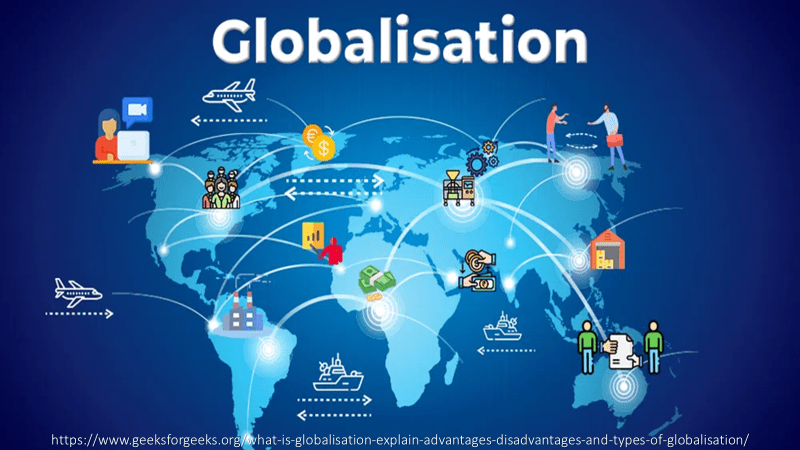
In our current time, we are in the so-called free market economy, heightened by globalization. Based on supply and demand, the free market economy permits people and commerce to exchange goods and services freely. Let us make it simple: We have access to products, either materials or services, from around the globe, not only local products in our country, as we experience nowadays — for example, online shopping, distance or online schooling and online jobs. Well, the discussion on this topic is far-reaching or broad. It is comparable to studying the history of human existence and societal development as it becomes more complex and complicated in our time. In this matter, let us narrow down things and let ourselves discover more insights in subsequent discussions on a more specific topic.
Now, let me sum up our discussion in three salient points. First, the economy is the mobilizing structure of any social organization and society, equilibrating resource scarcity and the needs of the people. Second, today, the economy is more complicated than before, established by the repercussions and complexity of globalization. For instance, the gap between the rich and the poor reinforces and perpetuates social inequality in all social structures, resulting in crimes, exploitations and other social deviances. Economic status measures individual influence and social power, more likely diminishing human compassion at some point.

Finally, in our modern time, the best thing we must learn in simple lessons from economics/economy as a field of study is to identify our needs and wants. Now, let us focus on fulfilling our necessities, such as food and water, shelter and clothing, education and medication, and not on satisfying our wants, such as designer clothes, foods and beverages in restaurants, luxurious cars and bigger houses because there is no contentment or satisfaction with them, leading us to a miserable life. Hence, scarce resources cannot supply both needs and wants. Thus, English economist Lionel Robbins best defined economics as the study of human behaviour concerning ends and inadequate means having alternative uses, despite the typical view that economics is all about money. We must remember that we have always had alternatives to what we have. Considering your available resources, consider the economy in your own life. Next time, we will discuss life experiences and their relationships with social institutions.
Thank you for tuning in to Greg’s InsighTalk: Your Way, our way of understanding pieces of social realities. Join me again in our following discussion.
 The InsighTalk